In this guide
Rain changes more than the amount of light. Wet pavement reflects signs and windows, umbrellas create shapes, and distant scenery can lose colour and contrast. A Fujifilm recipe that works on an ordinary cloudy day may not be the best choice for every rainy scene.
Start by deciding what makes the photograph interesting: reflections and shapes, warm colour, or the natural appearance of the landscape. That gives you a reason to choose a recipe instead of changing settings simply because it has started raining.
Three recipe directions for rainy weather
| The scene | A recipe to try | What to look for |
|---|---|---|
| Dark streets, silhouettes and strong reflections | Old Black & White | Separation between the subject and wet background |
| People, shop windows and warm buildings | Cinematic Gold | Whether warmth supports the scene without overpowering it |
| Wet forests and mountain landscapes | Mountain Reality | Natural colour and detail in the changing light |
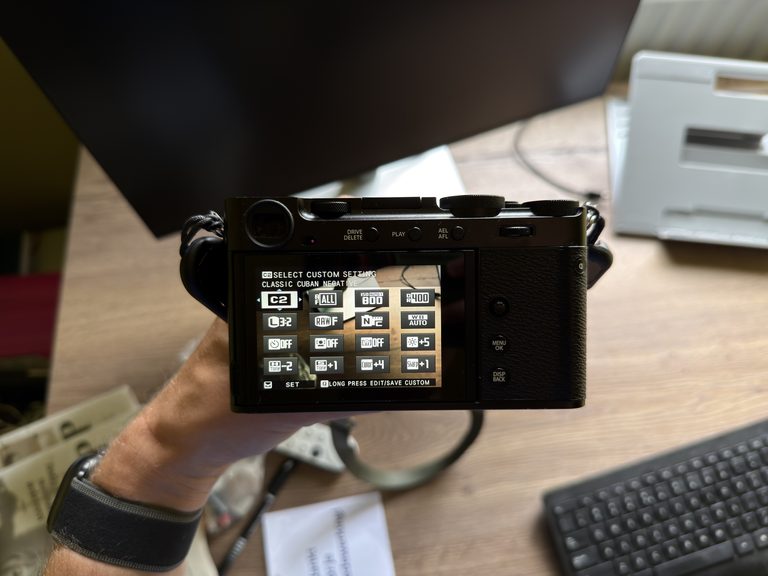
Check your camera first: Before copying the settings, use the Fujifilm recipe compatibility guide to check which controls and film simulations your model supports.
These are starting points from the existing recipe collection, not a claim that one look works in every kind of rain. For the exact settings, use the linked recipe cards and check your camera’s compatibility.
Black and white for rainy streets
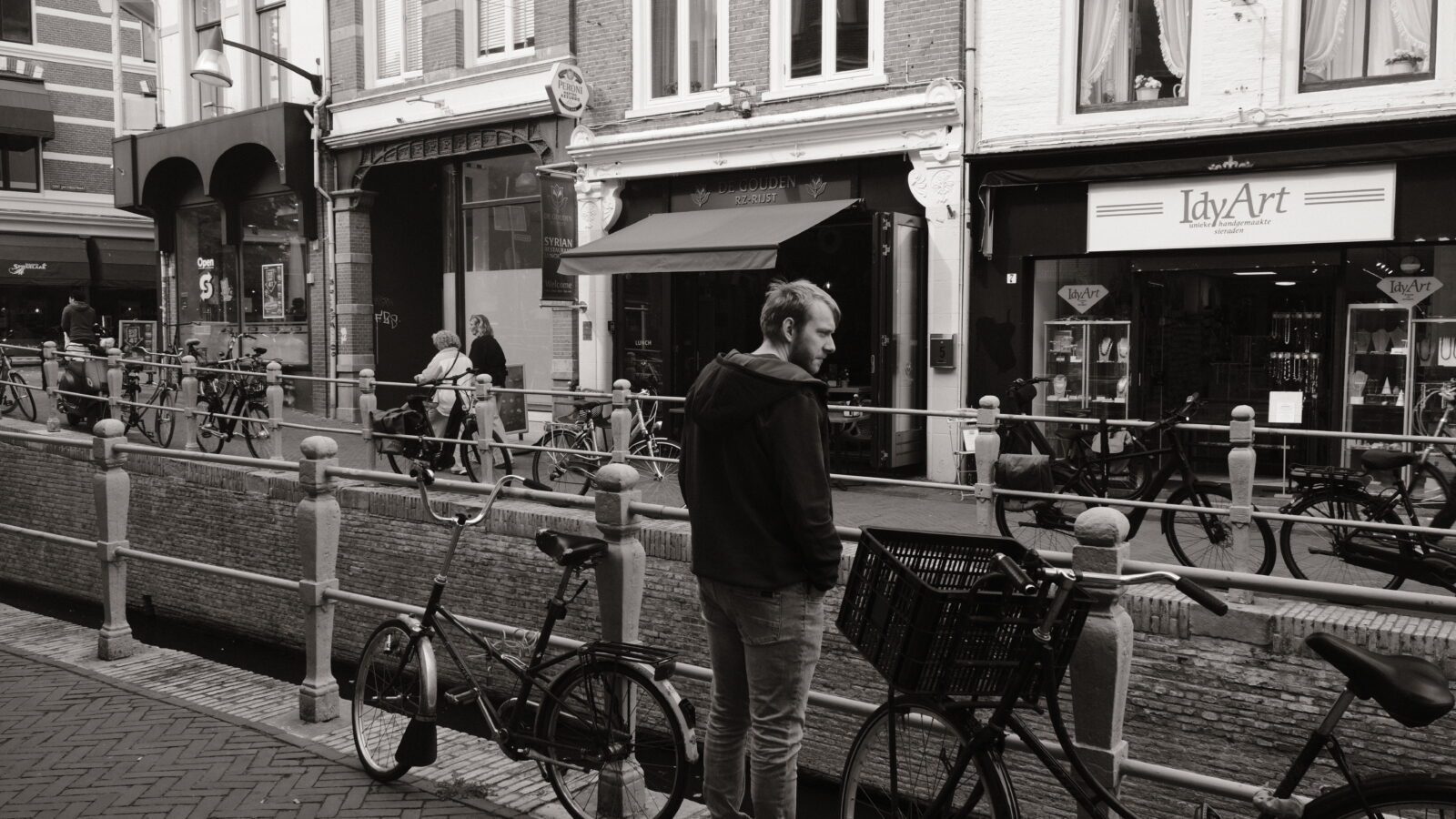
Old Black & White is worth trying when movement, shape and reflections matter more than colour. Look for a person against a bright patch of pavement, a silhouette beneath an umbrella or a reflection that simplifies the scene.
Monochrome also gives you a useful test: does the image still work when the colour disappears? If the answer is no, a colourful coat or illuminated sign may be doing important work in the composition. Keep the colour rather than forcing the photograph into a darker mood.
Warm colour when the scene needs it
Cinematic Gold offers a different starting point when the scene contains warm windows, buildings or people. Wet surfaces can repeat those colours and connect the subject with its surroundings.
Check skin tones and neutral areas on the camera screen. If everything becomes warmer than the scene needs, choose a more neutral approach. The point is to support the light that is already there, not to make every rainy day look like sunset.
Natural colour for wet landscapes
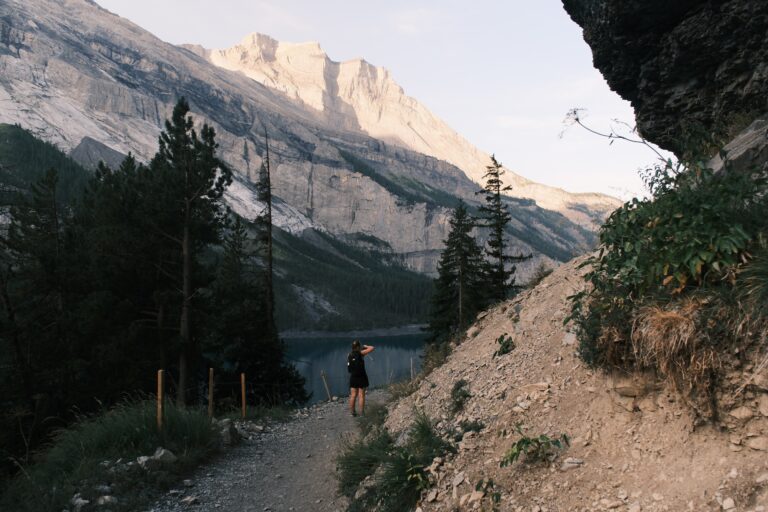
Mountain Reality is a useful candidate when you want to preserve the outdoor scene rather than emphasise a stylised city atmosphere. Wet leaves, rock and cloud can carry the image without heavy colour treatment.
Look for differences in brightness and texture. A recipe cannot replace those when the whole frame is flat. Moving closer to a foreground subject or waiting for a change in light may help more than switching between several looks.
Recipe settings do not solve exposure or movement
Choose shutter speed for the subject first. Moving people may need a faster exposure than an empty street, even when both scenes use the same recipe. Image stabilisation can help with camera movement, but it does not stop a person moving through the frame.
Check bright reflections and illuminated signs. If preserving those highlights makes the rest of the scene too dark, consider a different composition or save a RAW file alongside the JPEG for flexibility. Do not assume the same exposure compensation will work in every rainy scene.
Rain and your equipment: Read the official Fujifilm WR-lens guidance for the requirements of a compatible camera and lens combination before shooting in wet weather.
Protecting the camera
Check the guidance for your exact camera and lens before exposing them to rain. Fujifilm says its dustproof and splashproof WR lenses can be used in light rain when attached to a compatible dustproof and splashproof body, with additional care to remove water afterwards. That is model-specific guidance, not permission to expose every Fujifilm combination to wet weather. See Fujifilm’s official WR-lens guidance.
A sheltered viewpoint can be enough to photograph the rain. Keep droplets off the front element and stop if the conditions go beyond your equipment’s instructions.
How to choose without constantly changing recipes
Choose one colour look and one black-and-white look before you go out. Photograph a scene that suits each, then compare the results. That makes the difference easier to judge than changing recipes after every frame.
For soft light without wet surfaces, the cloudy-weather recipe guide is the better starting point. If a setting is missing from your camera, check recipe compatibility before substituting it.
Frequently asked questions